Can You Really Change the World Starting With One Choice?
The world feels broken, but what if the solution isn’t out there—it’s within you? Every thought, every reaction, every choice shapes…

 Politicians and policymakers are discussing what parts of the Affordable Care Act to change and what to keep. While most of us have little control over those discussions, there is one health care topic that we can control: what we talk about with our doctor.
 We can start difficult conversations by speaking from the heart and sharing our wish for a world where everyone is safe and free.
 Doctors don’t just “get over” rude treatment from patients, research suggests. In simulations with an angry parent, the performance of pediatricians suffered dramatically.
 There is a natural tendency to synchronize, to link up with others. When two violins are located in the same room and a string is plucked on the first one, the string tuned to the same frequency on the second violin will vibrate, thus sounding the note...
 People worldwide love ????, except the French, who prefer ??, according to a new study of global emoji usage.
 Donald Trump has just finished the last of his nine post-election “thank you tour” rallies. Why did he do them? And why is he planning further rallies after he becomes president?
 Empathy guides us in the accurate understanding of situations and relationships. When we live with empathy, we realize that it is a kind of virtual reality: we put ourselves in the other person’s shoes, absorbing her experience...
 Around this time of year, we all hear friends and acquaintances voicing dread about their upcoming family visits. From the sister-in-law who can't stop offering advice about how to raise your children to a father who has something negative to say about almost anything.
 Put-downs are terms of disrespect, of ridicule and humiliation. I use the term shut-down for a form of communication that, instead of opening up a topic and encouraging debate and healthy conflict, shuts it off. Shut-downs may be overt but shut-downs can also be very subtle...
 As human beings, the greatest gift we have at our disposal can also be the greatest weapon—words. We can heal ourselves, others, and the world with words; yet they can also be used in a destructive manner. Most of us are unaware that the ways in which we relate are entirely distorted and unnatural.
 Assess how you currently navigate challenges: Do you immediately isolate, put on your armor, grab your sword, and head out into the forest to slay the dragon alone? Or do you enlist the help and strategic counsel of other knights and soothsayers who...

One of the things that defines humans most is our ability to read others’ minds – that is, to make inferences about what others are thinking. To build or maintain relationships, we offer gifts and services – not arbitrarily, but with the recipient’s desires in mind.
 Almost half the population of the planet now has access to the internet, with about one in three of those people regularly active on social media.
 Many of us also have a strong tendency to withhold giving input to others that we fear may cause them to feel upset or angry. We are reluctant to say things to others that aren’t “nice.” Consequently, we may adopt some effective ways of discouraging...
 There are two voices in our minds. One belongs to the ego, the other to the Holy Spirit (you may call this peaceful inner messenger your Higher Power or Great Spirit or Universal Source or whatever name you choose). Both voices are always available to us, but one is very loud and generally gets our attention.
 At times, it can feel like adults are speaking a completely different language when talking to young people. Even small generational divides feel like gaping chasms as each party tries to relate their experiences in a way the other will understand.
 We all seek to express our truth. We all must express our truth. There are two ways to express your truth: directly or indirectly. If you do not express your truth directly, it will come out in odd, aberrant, and damaging ways. Self-sabotage or sabotage of others ...
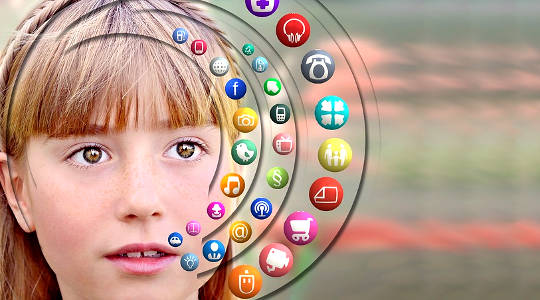 When my digital media students are sitting, waiting for class to start and staring at their phones, they are not checking Facebook. They’re not checking Instagram, or Pinterest or Twitter. No, they’re catching up on the news of the day by checking out their friends’ Stories on Snapchat, or...
 Needs and values — the things we care about, the sources of our wants — matter because they are the contents of our core selves. They make up much of the terrain of our inner worlds. Needs and values are indeed highly interconnected, but there is an important distinction between the two.
 Just like Colorado aspens or giant California redwoods need each other for support and to survive, so do people. Science now substantiates what we intuitively know: It feels good to be part of a team effort. When you have a shared goal you can go to greater heights of creativity and success.
 Traditional Native American societies may be the best models of balanced societies in existence today—with only about 500 years of European contact and assimilation, versus 2,000 years. Native people viewed themselves—not their political, social, or religious lives—as individuals. The names that Native groups gave themselves generally translated to “the People” or “human beings.”
 If you’ve ever thought about quitting Facebook, you’re not alone. Maybe you’ve even shut down your account, swearing never to return, only to log back in a week later.
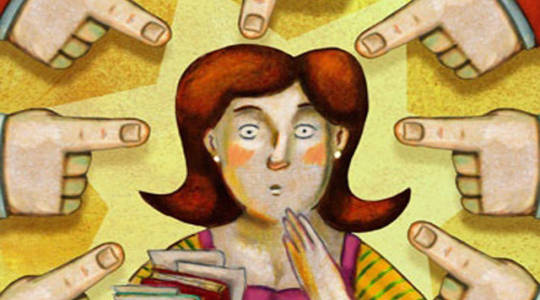 Chances are you’ve seen and heard an emotional manipulator at work. Perhaps you even live or work with someone who regularly pulls out their blame gun and sprays accusations on everyone but themselves. They get angry and indignant and go on and on about how stupid, ineffective, or lame others are.